
HSS vs Cobalt vs Carbide Drill Bits: Which One Do You Actually Need?

Not all drill bits are created equal. And not all suppliers are either.
This guide breaks down the three core drill bit materials — High-Speed Steel (HSS), Cobalt, and Carbide — in plain language, so you can make the right call for every job. We'll also explain why Sutton Tools is the benchmark brand for Australian tradespeople and engineers, and why WeldConnect is the supplier serious workshops trust to get the right product to the right place, every time.
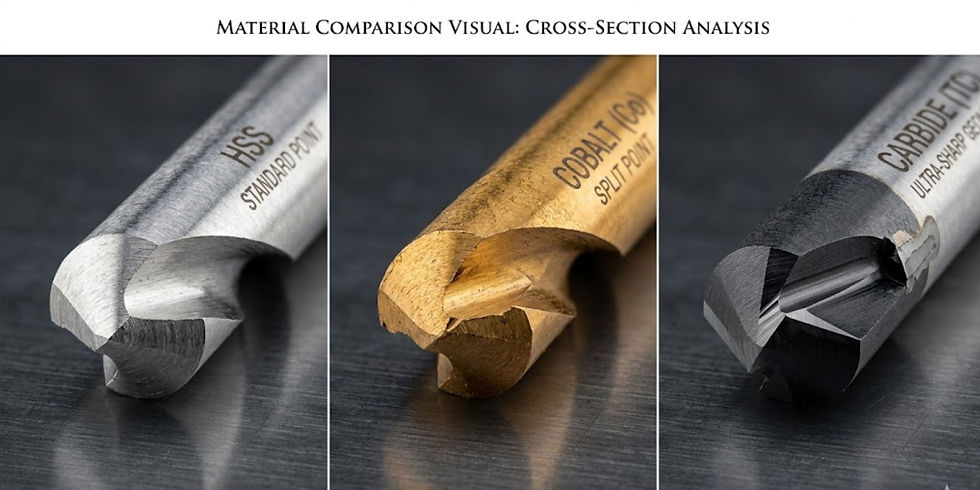
Quick Comparison
HSS | Cobalt | Carbide | |
Hardness | 60–65 HRC | 65–70 HRC | ~90 HRA |
Heat Resistance | ~500 °C | ~700 °C | ~1000 °C |
Toughness | High | Medium-High | Low (brittle) |
Relative Cost | $ | $$ | $$$ |
Best For | General use | Stainless steel | CNC production |

HSS Drill Bits — The Everyday Workhorse
What They Are
High-Speed Steel is an iron-based alloy containing tungsten, molybdenum, chromium, vanadium, and carbon. The name dates to the early 1900s when it was discovered this steel composition retained its hardness at the elevated temperatures generated by fast machining — a dramatic improvement over plain carbon steel that would soften and lose its edge almost immediately.
There are several grades. M2 is the global standard — the best balance of hardness, toughness, and grindability. M42 is a molybdenum-rich variant with higher cobalt content, offering better heat resistance while still being sold commercially as "HSS."
The Sutton Difference: Silver Bullet & Blue Bullet
Sutton Tools produces two flagship HSS jobber drill lines that set the standard in Australia:
Silver Bullet (D101) — Bright finish HSS manufactured from M2 steel. The benchmark general-purpose drill for mild steel, aluminium, and plastics. Ground-from-solid for consistent geometry and accuracy from first hole to last.
Blue Bullet (D102 / D110) — The Silver Bullet with a steam-oxide (blue) finish that reduces friction, improves lubrication retention, and extends bit life on ferrous materials. The go-to for workshops that need better performance without stepping up to cobalt pricing.
Sutton sources its high-speed steel from France and Austria — deliberately choosing European-manufactured steel over cheaper alternatives because the quality difference shows up in the cut.
Pros
Low cost — practical for occasional or high-turnover use
Tough and forgiving of hand-drill wobble and vibration
Easy to resharpen on a bench grinder
Available in every metric and imperial size
Cons
Edges wear faster on hard or abrasive materials
Sensitive to overheating — damage is permanent
Not ideal for stainless steel without an upgraded coating
Shorter service life in heavy-volume production
Best Used For
Mild steel, aluminium, wood, MDF, plastics, copper, brass, general workshop, hand drilling, site work, and maintenance.

Cobalt Drill Bits — The Heat-Resistant Upgrade
What They Are
Cobalt drill bits are HSS alloyed with a higher cobalt content — typically 5% (M35 grade) or 8% (M42 grade). This changes the metallurgy in a critical way: it raises the alloy's red-hardness, the ability to resist softening at elevated temperatures, far beyond standard HSS. Where HSS begins losing its edge above 500 °C, cobalt bits remain hard past 700 °C.
This is not a minor upgrade. When drilling stainless steel, titanium, or any material that work-hardens quickly, heat is the primary enemy. A cobalt bit stays sharp long enough to cut through before the workpiece hardens around it.
The Sutton Difference: HD-Cobalt Series
Sutton's HD-Cobalt (D108 / D109) series is built specifically for Australian industrial conditions:
5% Cobalt (HSS-Co5%) formula for abrasive and heat resistance at elevated cutting temperatures
135° Split Point (above 2mm) for accurate self-centring without a pilot hole and reduced drilling pressure
Thick core for increased rigidity when drilling hard, abrasive materials
Colour-tempered surface finish — immediately identifiable as cobalt tooling, no guessing at the drill index
Precision-ground parallel shank for accurate hole sizing
The HD-Cobalt range also includes the Supabit (D213) — a hex-shank cobalt bit designed for quick-change power tool adaptors, ideal for fabrication environments where speed of changeover matters.
The Stainless Steel Problem — Solved
Stainless steel (grades 304 and 316) is the classic cobalt drill bit challenge. These grades have poor thermal conductivity — heat builds at the cutting zone faster than it can dissipate into the workpiece. They also work-harden aggressively: slow or hesitant drilling lets the material harden ahead of the cutting edge, dramatically increasing resistance.
An HSS bit tends to rub rather than cut on stainless, generating heat that blunts the edge in seconds. A Sutton HD-Cobalt bit, run at proper speed with firm, consistent feed pressure and cutting fluid, stays sharp and cuts cleanly through what breaks lesser bits.
Pros
Excellent performance on stainless steel, titanium, and hard alloys
Retains hardness past 700 °C
135° split point eliminates need for a centre punch on most materials
Can be resharpened — cost-effective per hole over time
Cons
Higher cost than standard HSS
Slightly more brittle — avoid side-loading or hammering
Overkill for soft materials — unnecessary spend
Best Used For
Stainless steel (304, 316), titanium, Inconel, hardened alloys, cast iron, fabrication shops, aerospace maintenance, and any material that causes rapid HSS wear.

Carbide Drill Bits — The High-Performance Specialist
What They Are
Solid carbide is not a steel at all. It is a sintered ceramic-metallic composite — tungsten carbide particles (WC) bound with a cobalt binder, typically at a 90/10 ratio. The result is extraordinary hardness (1500–1800 HV), outstanding abrasive wear resistance, and heat tolerance exceeding 1000 °C.
The performance gap over steel tooling is not incremental — it is categorical. In a CNC machining centre with flood coolant and proper parameters, a carbide drill can run thousands of holes in hardened steel at speeds that would destroy a cobalt bit in minutes.
Sutton's Carbide Range
Sutton Tools has invested heavily in carbide capability, including a dedicated facility for high-performance carbide specials and regrinding services. Their carbide offering is built for production environments where accuracy, speed, and tool life are measured against bottom-line output.
For surface applications, Sutton's diamond-tipped core drills extend carbide's principle — extreme hardness at the cutting edge — into ceramic tile, porcelain, and glass drilling where no steel tool will cut effectively.
The Brittleness Tradeoff
Carbide's weakness is brittleness. It cannot absorb shock energy without fracturing. Lateral deflection, a vibrating workpiece, a hand drill wobbling off-axis — any of these can snap a carbide drill instantly. CNC machining centres with tight spindle runout are their natural environment. On a pillar drill with worn bearings or in a cordless drill on site, carbide is the wrong tool regardless of the material.
Carbide-tipped vs solid carbide: Sutton also supplies carbide-tipped masonry bits — steel bodies with brazed carbide tips — offering the hardness advantage for brick, concrete, and stone without full carbide's brittleness risk in hand-held applications.
Pros
Maximum tool life in CNC production applications
Fastest cutting speeds — highest throughput per shift
Outstanding on hardened steel, composites, and ceramics
Exceptional abrasive wear resistance
Cons
Brittle — snaps under lateral force or vibration
Expensive — breakage is costly
Requires rigid machine setup with minimal runout
Requires specialist grinding to resharpen
Best Used For
CNC machining centres, hardened steel (above 45 HRC), carbon fibre composites, ceramics, high-volume production drilling, PCB work, and masonry (carbide-tipped).

Which Bit for Which Job?
Scenario | Recommended |
General workshop — mild steel, aluminium, wood | Sutton Silver Bullet HSS |
Better wear life on ferrous materials | Sutton Blue Bullet HSS |
Drilling 304 or 316 stainless by hand or pillar drill | Sutton HD-Cobalt M35 |
Titanium or Inconel — fabrication or aerospace | Sutton HD-Cobalt M42 |
Quick-change setup, hex shank needed | Sutton Supabit Cobalt |
High-volume production in a CNC machining centre | Sutton Solid Carbide |
Hardened steel above 45 HRC | Sutton Solid Carbide |
Carbon fibre reinforced polymer (CFRP) | Sutton Solid Carbide |
Masonry, brick, or concrete | Sutton Carbide-Tipped Masonry |
Why Sutton Tools — And Not Something Cheaper Off the Shelf
There is no shortage of drill bits on the Australian market. Budget sets from unknown brands fill the shelves of hardware chains, priced to move. They are also priced for what they are: inconsistently ground, made from lower-grade steel, and packaged to look like value.
The real cost of a cheap bit is not the sticker price. It is the time lost to a blunt edge mid-job, the rework from an off-centre hole, the consumable burn of going through three bits to do what one Sutton bit would have done cleanly.
Sutton Tools, founded in 1917, is the only production manufacturer of cutting tools in Australia. Through continual investment in R&D, Sutton provides product, surface coatings, and regrinding services specific to the sophisticated applications encountered by industry. About 40% of what they make is exported globally — which tells you everything about where Australian-made tooling sits on the international quality scale.
Sutton Tools developed its "Ground-from-Solid" process in the 1960s, after engineers travelled the globe to determine the best method to produce the finest drill in the world. That process — grinding the full bit geometry from a solid steel bar rather than forming it — is still the hallmark of quality cutting tools today.
As third-generation family member Jim Sutton put it: "Our goal for generations has always been to make the most durable and reliable cutting drill range available."
When you buy Sutton, you are buying over a century of Australian manufacturing expertise in every bit.
A Note on Coatings
The base material is the foundation. The coating extends it.
TiN (Titanium Nitride) — Gold finish. Increases surface hardness and reduces friction on steel and cast iron. Good for general use.
TiAlN (Titanium Aluminium Nitride) — Dark grey to black. Premium coating for dry, high-heat machining. Forms a protective aluminium oxide layer at elevated temperatures. Ideal on cobalt and carbide for hardened steels.
Steam Oxide (Blue) — Sutton's Blue Bullet finish. Reduces friction, improves lubrication retention, extends HSS life on ferrous materials. Cost-effective step-up from bright HSS.
Black Oxide — Basic steam-treated finish. Modest corrosion and friction improvement over bare HSS. Entry-level coating.
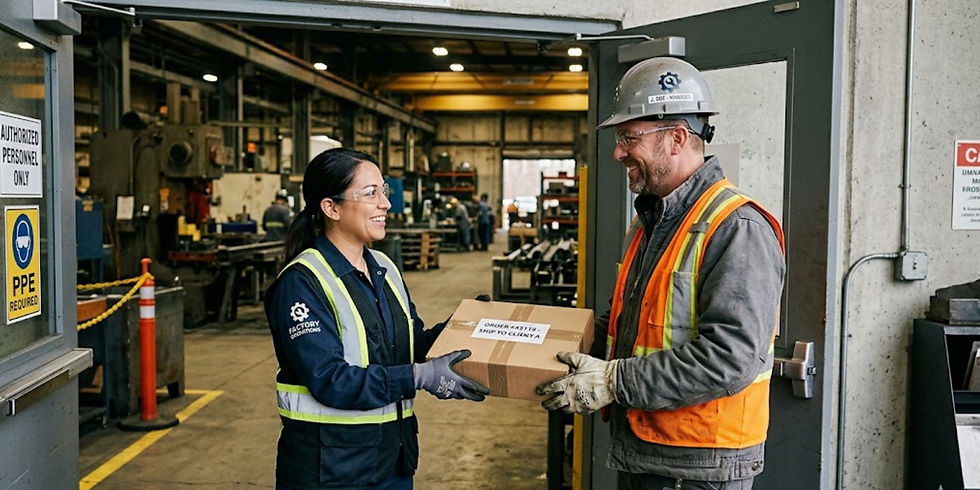
Where to Get Sutton Tools in Australia — WeldConnect
Knowing the right product is half the equation. Getting it reliably — the right size, the right grade, in stock, delivered when you need it — is the other half.
That is where WeldConnect earns its place.
WeldConnect is a Queensland-based welding and workshop supply specialist with national reach, operating out of Hemmant, QLD. As a dedicated welding supply partner, they are not a catalogue-and-ship operation. They stock consumables, PPE, welding machines, compliance testing, and cutting tools — including Sutton Tools — and they have built their reputation on actually knowing what they are selling.
Philip Barr, who has dealt with WeldConnect for years across welding consumables, equipment, and compliance testing, said it simply: "For a one stop shop you won't find anyone better."
Bobby Smyth described the supply model from an operations perspective: "Excellent service from the whole team — saves our time in sourcing consumables and keeps our workshop stocked with all our needs, from a welding tip to test and tagging the equipment. All delivered and stored away for us."
For technical guidance before purchasing — particularly on tooling decisions like drill bit grade, geometry, and application match — WeldConnect's team is the kind that runs you through it properly. As Brenten Snow put it after buying through them: "He ran you through the whole machine so you didn't have to worry about anything — went above and beyond what you would ever think." That same hands-on approach carries across their full product range, including cutting tools.
The team at Terex/Franna — a major industrial operation — put it plainly: "The guys from WeldConnect are always happy to answer any questions and follow up on requests. Great guys, great service, great range of products — three thumbs up."
And builttougher, who moved companies and brought WeldConnect along: "Competitive on price and valuable knowledge. A+."
That is the WeldConnect standard: not just stock on a shelf, but the knowledge to match the right product to the right job, and the reliability to keep your workshop running. Recognised as a trusted welding suppliers and service provider in Australia, WeldConnect has built that reputation one workshop at a time.
Glossary
Red-hardness — The ability of a material to retain its hardness at elevated temperatures. The defining characteristic that separates cobalt and carbide from standard HSS.
Work-hardening — A phenomenon in stainless steel and titanium where deformation during cutting increases hardness at the cutting zone, making slow or hesitant drilling progressively harder.
Ground-from-Solid — Sutton's manufacturing process of grinding the complete bit geometry from a solid steel bar. Ensures precise, consistent geometry that formed bits cannot replicate.
Feed rate — The axial distance a drill advances per revolution. Too slow on work-hardening materials causes rubbing and blunting; too fast on hard materials causes overload and breakage.
Runout — Eccentricity in a rotating spindle or chuck. High runout causes vibration that snaps carbide drills. Always check runout before fitting carbide tooling.
HRC / HRA / HV — Hardness measurement scales. Rockwell C (HRC) for steels; Rockwell A (HRA) for carbide; Vickers (HV) covers the full spectrum including ceramics.

The Bit Doesn't Start the Job — The Right Choice Does
There is a version of this decision that quietly costs you: cheap bits that blunt on the first hole, wasted time on rework, consumable budgets that keep climbing with nothing to show. And there is a version that just works — knowing your material, matching the grade, choosing a manufacturer who has been refining the process since 1917, and buying from a supplier who treats your workshop like their own.
Sutton Tools manufactures the standard. WeldConnect delivers it.
WeldConnect — Make It Great weldconnect.com.au | 1300 828 764 | Hemmant, QLD One of the leading welding suppliers Australia trusts — cutting tools, welding supplies, compliance testing, nationally.
Comments